Separate shelves from mechanics
Top and New describe how the catalogue organises entries. Books and Fruits describe themes. Slots, live games and instant formats distinguish broad products. A theme tells you what you may see; a mechanic tells you how an outcome is evaluated. Those are different levels of description.
A book-themed title can have its own wild, scatter, multiplier and free-spin rules. A fruit image does not guarantee a traditional three-reel layout. When a category leads to a tile, read the exact title and developer, then the layout and winning method. Do not let a familiar visual theme skip that second step.
Mechanical categories can overlap. A slot can have both a purchase option and a respin feature, or combine changing reel heights with cascades. Appearing in several filters does not make several separate games. The filter is a starting point for discovery, not the complete ruleset. Current reference: explore Dukat.bet.
Read RTP as a model of turnover
RTP relates theoretical returned amounts to accumulated stakes under a defined model. In a hypothetical 96% model, €10,000 of stakes corresponds to €9,600 of expected return in that mathematical interpretation. This is not a promise on a €10,000 deposit or a prediction of a €400 loss in one visit.
Turnover can include money returned and wagered again. A starting balance can therefore generate more total stakes than its own size without another deposit, and still end at zero. Treating RTP like an interest rate would reverse its meaning: it does not promise growth or preservation of capital.
For a smaller illustration, 96% corresponds to €96 per €100 of stakes in the theoretical aggregate. Comparing 96% with 94% compares models, not a guaranteed €2 difference in every personal €100 session. The actual short-run outcomes need not resemble either average.
The version belongs beside the percentage
Manufacturer references list Wanted Dead or a Wild at 96.38%, 94.55%, 92.33% and 88.42%, and Le Bandit at 96.34%, 94.23%, 92.17% and 88.36%. The list explains why a game name is insufficient to identify the active return. It does not establish which variant every Dukat account receives.
Open the actual help panel and identify the configuration and mode. A separately configured purchase option can have its own published return. A High RTP lobby label cannot supply a missing version identifier. Keep an unknown field unknown until the relevant source establishes it.
Volatility and hits describe different things
Volatility concerns the spread of outcomes. Two models can share the same theoretical return while distributing it very differently across small payments, larger payments and losing rounds. Neither distribution makes a future result due after a particular history.
A hit can be a payout below the cost of the round. In an illustrative €1 round returning €0.30, the screen may celebrate a win while the net balance falls by €0.70. Counted hits and profitable rounds are therefore not necessarily the same measure.
Provider labels such as 3/5, Medium or High are not a common ruler. Use the rating within the studio’s own system, and distinguish it from hit frequency or feature frequency. A missing classification cannot safely be reconstructed from colourful animations or a maximum-win headline. Current reference: view the current offer.
A purchase button sells entry, not an outcome
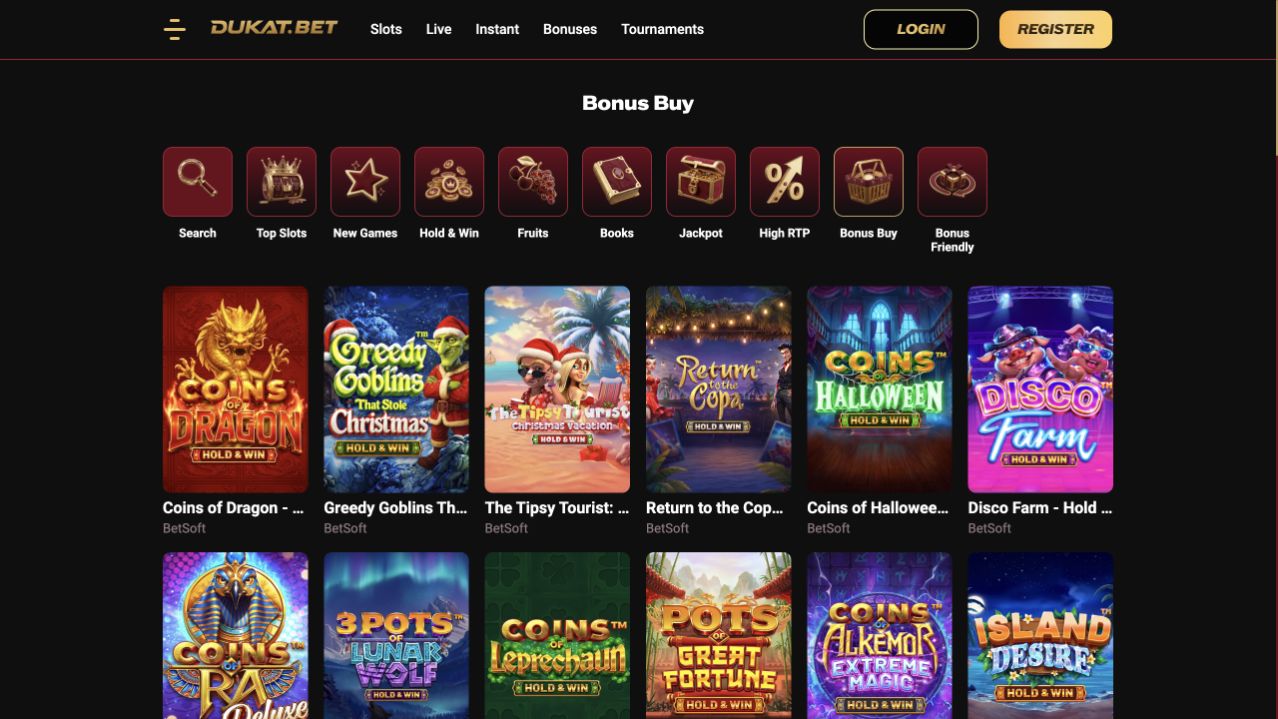
Bonus Buy refers to paid access to a defined feature where the game offers it. Identify what is bought: an entry, a particular mode or another stated initial condition. The charge does not buy a guaranteed profit or erase the possibility of a poor feature result.
For a hypothetical 100× price at a €0.20 base, the full charge is €20. Any resulting payment must be compared with €20, not €0.20. That equals the cost of one hundred ordinary €0.20 rounds only as arithmetic; it does not make the duration or outcome distribution identical.
Read confirmation screens carefully when several options appear. Each can have a different price and starting condition. An account promotion may prohibit purchases or treat the total cost as the relevant bet. The base-stake control alone cannot demonstrate compliance with such a limit.
Changing ways are possible combinations
Megaways involves variable symbol counts on reels, so the arrangement of a particular spin determines its possible winning ways. A figure such as 117,649 ways is a possible layout in a game that supports it. It is not that many awarded wins and does not mean the maximum layout appears every round.
Read what constitutes a matching sequence across the reels before inspecting additional features. A cascade can continue an evaluation, while a multiplier can change a qualifying award. Those mechanisms need separate explanations even when they appear in the same animation.
A familiar Megaways suffix still does not establish every trigger, reel rule or return setting. Identify the specific title and inspect the loaded rules. The changing grid is information about the current round, not a clue for predicting the next arrangement.
Locked symbols require a reset rule
Hold & Win-style descriptions commonly direct attention to retained symbols and a respin counter, but the exact title defines the trigger and continuation rules. Ask which symbols lock, what resets the remaining attempts and what ends the feature. Watching only a coin animation misses the state of that counter.
Also identify the unit written on a symbol. A hypothetical 20× at a €0.20 total stake is €4 only if the rules define the multiplier that way. A currency amount and a stake multiple should not be added without conversion. If changing the stake changes the labels, read the value again before starting.
A feature prize belongs to the game’s settlement. A casino deposit match or event prize belongs to another set of conditions. The same word “bonus” can describe both, so name the layer you mean when reading a balance or asking support a question.
Turn a category into a useful question
Instead of asking whether Books is better than Fruits, ask which combinations count and how a round ends. Instead of treating High RTP as a personal refund promise, ask which configuration is loaded. Instead of judging Bonus Buy by its large displayed multiplier, ask what the confirmation will charge.
Once those questions are answered, compare the intended action with your existing budget and any active promotion. A catalogue filter cannot choose an affordable stake or make a game eligible for a campaign. The purpose of understanding categories is to recognise the information still needed before an action. Current reference: check the operator’s rules.
Classify a round in three questions
A useful classification starts with “What makes a win?” A line, a connected cluster and a count anywhere on the screen are different answers. The next question is “What happens after that evaluation?” The game might end the round, replace symbols, repeat part of the layout or enter a feature. Only then ask “What modifies the award?” A multiplier, collector or retained position may operate at that later stage. This order keeps the cause of a win separate from the continuation and the adjustment.
For example, a cascade is not itself evidence of a cluster rule. Winning symbols can disappear under a different evaluation system. Likewise, a multiplier appearing during a sequence does not establish that every intermediate payment receives it. The help panel must define its scope. Reading the three questions in order makes an animated result easier to explain without assuming that every visual effect creates another stake or another independent prize.
Use a simple note for an unfamiliar title: evaluation, continuation, adjustment. Fill it only from the title’s own rules and observed labels. If the adjustment cannot be explained yet, leave it unresolved and return to the corresponding help section. You do not need to learn an entire catalogue before understanding one game. Nor does completing the note make the outcome predictable; it only establishes what the displayed result means after the game has evaluated it. That distinction is central to using categories as education rather than as a betting system.
Compare a headline maximum without mixing denominators
Maximum-win descriptions can use different reference stakes. One number may be a multiple of total bet; another may be attached to a line stake or another defined unit. A large printed multiplier therefore cannot be ranked until its denominator is known. This is particularly relevant when moving between a many-line Amusnet reference and a grid-based game whose reference uses total stake.
Take an imaginary 25-line game with equal line stakes and a €0.50 total. Each line carries €0.02. A fictional award described as 100 times line stake would be €2 under that assumption; 100 times total stake would be €50. These examples deliberately use the same multiplier to expose the difference in units. They are not maximum-win claims for Mighty Sparta or any other named title. If the source does not make the reference unit clear, the correct comparison remains incomplete.
The same discipline applies to feature prices and symbol values. A price of several base stakes is a cost, while a symbol multiplier can be part of a conditional payout. Both may use “x” in the interface without representing the same side of the transaction. Label each number as charge, possible award or already settled result. A maximum also says nothing by itself about how often that outcome occurs. The largest possible figure is not an estimate of an ordinary session and cannot replace RTP, distribution information or an affordable spending boundary.
Distinguish an example state from a starting state
Promotional media often makes a mechanic easiest to see by showing it after something has happened: a grid contains marked positions, a collector has values to collect or a multiplier is already active. Such a scene can explain the visible feature state while saying little about how that state was reached. Before interpreting it, identify whether it shows the base game, a triggered feature or a later moment within that feature.
For a position-based example, ask which marks were created earlier and which are new in the displayed step. For a collection example, ask whether a visible value has been collected or is merely available if a condition occurs. For a respin example, ask how many attempts remain and what action can reset them. These questions follow from different mechanics; one generic “bonus round” label cannot answer all of them. The corresponding title’s help defines the actual transition and reset rules.
A trailer is particularly poor evidence of frequency. Editing can place unusual or visually clear moments next to one another without showing the ordinary rounds between them. That does not make the demonstration false, but it limits what it establishes. Use official media to recognise symbols and interface states, then use written rules for the trigger and configuration. Neither source should be presented as our recorded real-money Dukat session. Understanding a developed state also does not mean that the next new round will start from it or that spending more will recreate it. Current reference: open the game lobby.
| Game | Format | RTP |
|---|---|---|
| Lucky Hot | 3 reels · 5 fixed lines | 95.32% |
| Dragon Hot | 20 fixed lines · multiple reel sets | 96.31% |
| Book of Magic | 5 × 3 reels · 20 lines | 96.09% |
| Mighty Sparta | 5 × 3 reels · 25 fixed lines | 96.04% |
| Gates of Olympus 1000 | Scatter pays · tumbles | Check in game |
| Sweet Bonanza 1000 | 6 × 5 grid · scatter pays | Check in game |
| Sugar Rush 1000 | 7 × 7 grid · cluster pays | Check in game |
| Big Bass Splash | Free spins · money-symbol collection | Check in game |
Published manufacturer figures do not establish the configuration served to a particular Dukat account.